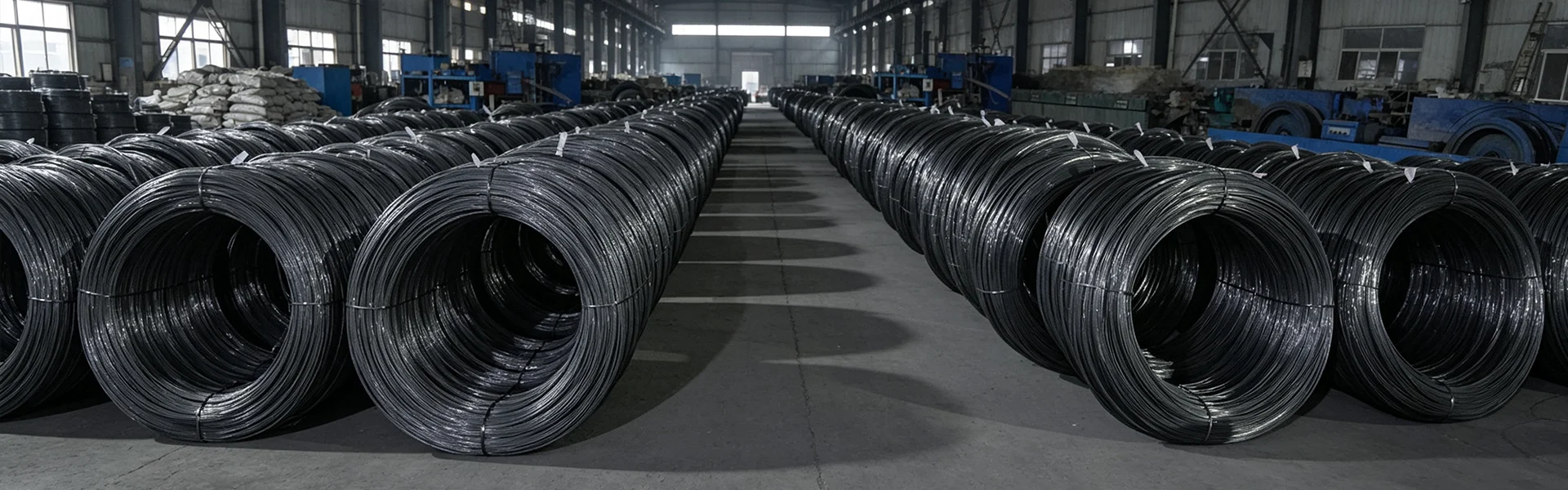
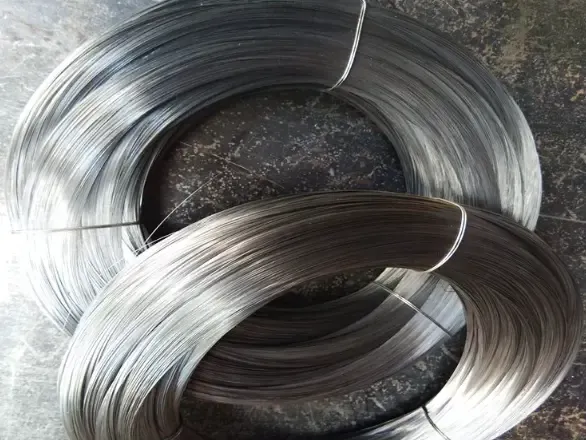
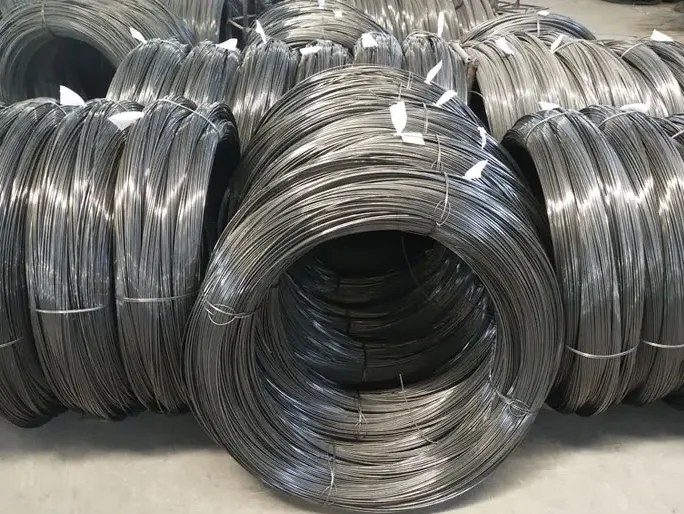
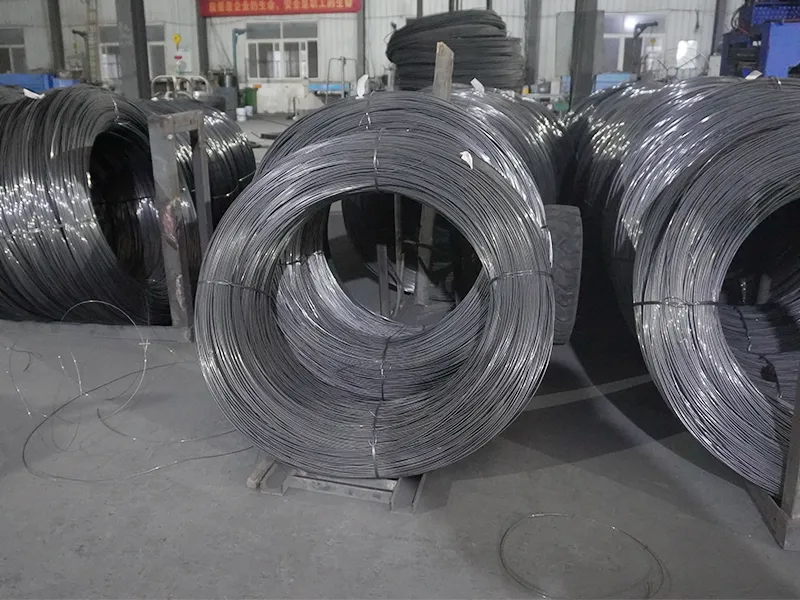
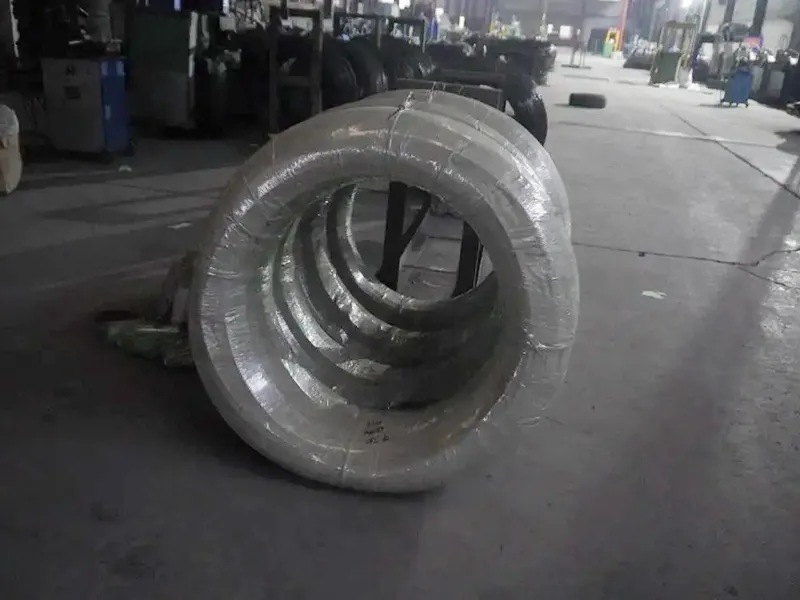
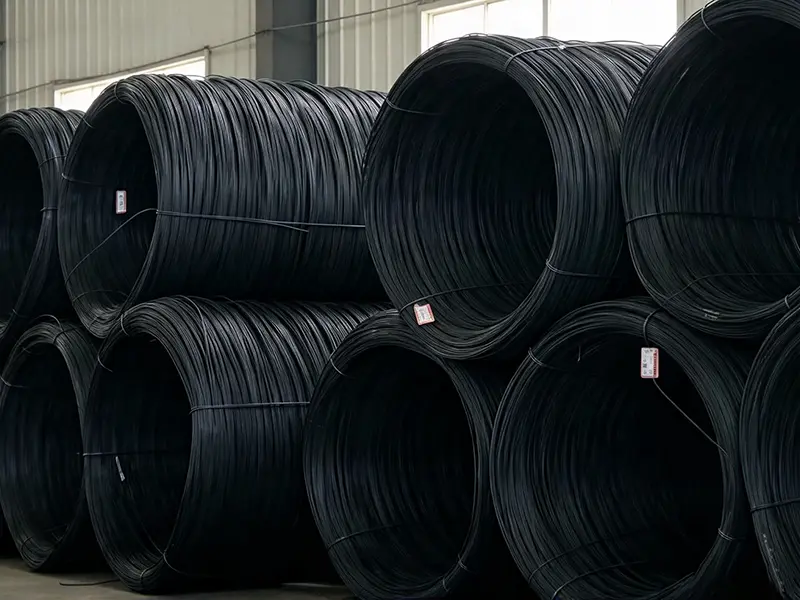
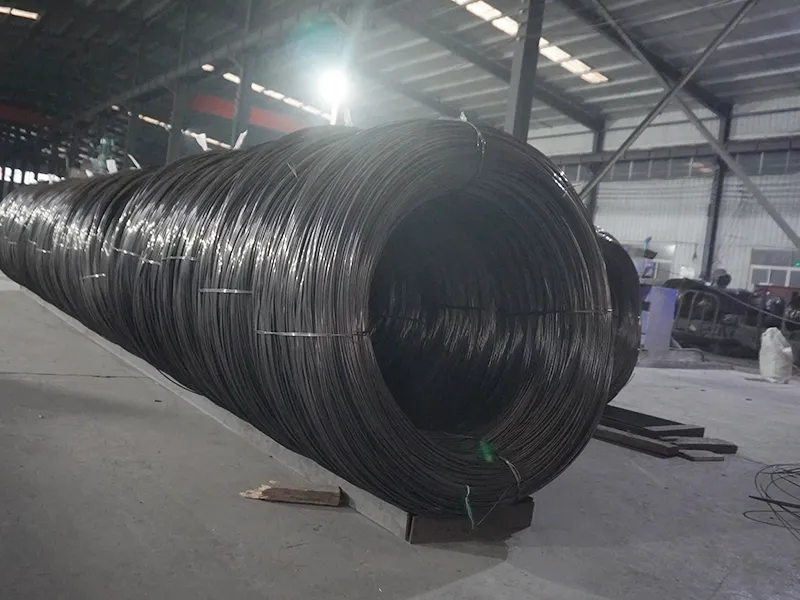
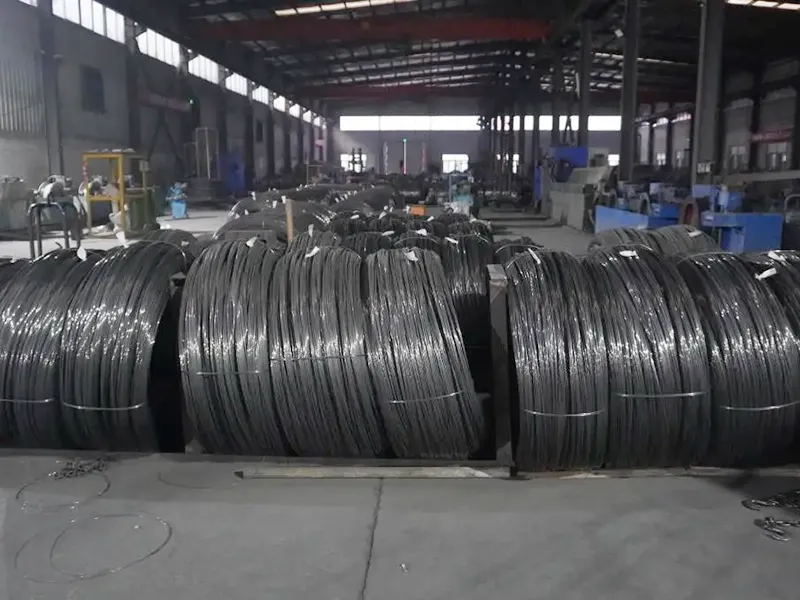
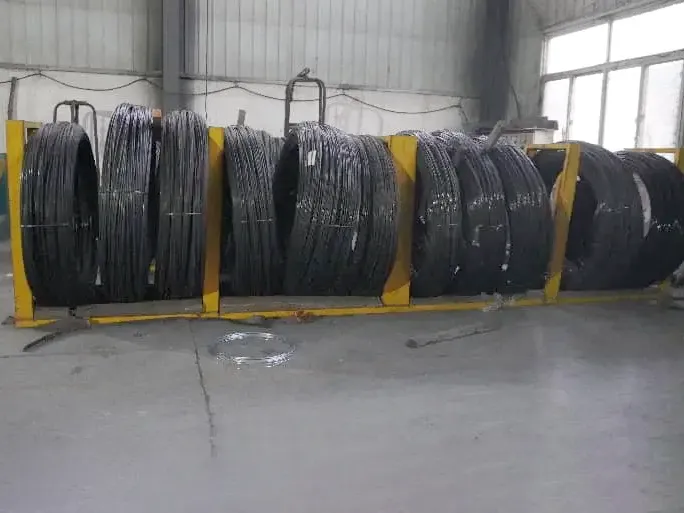
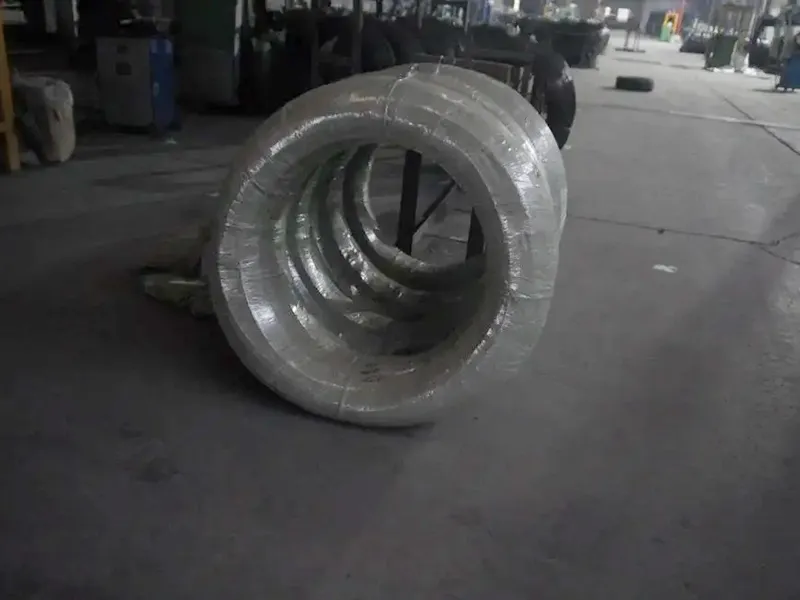
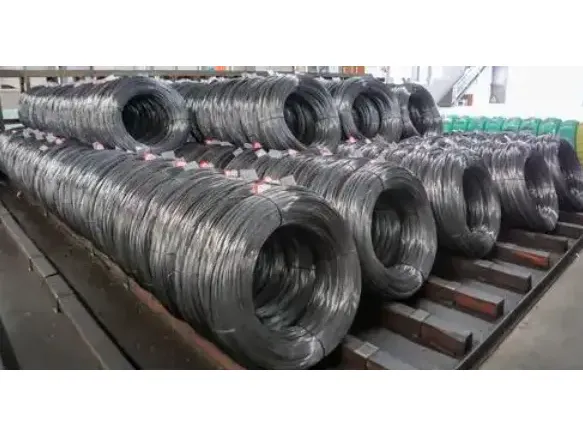
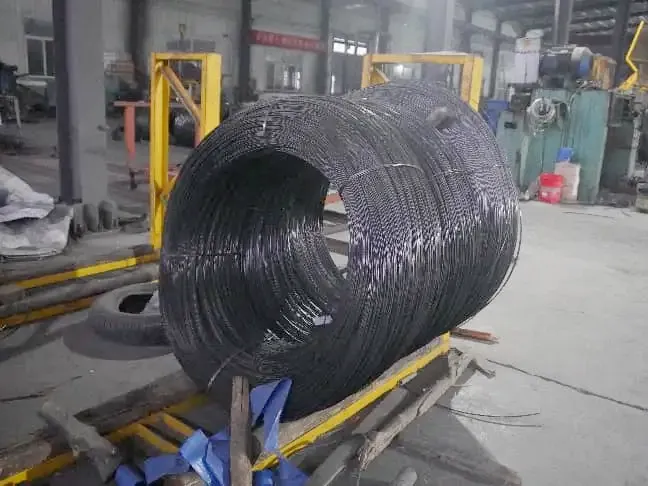
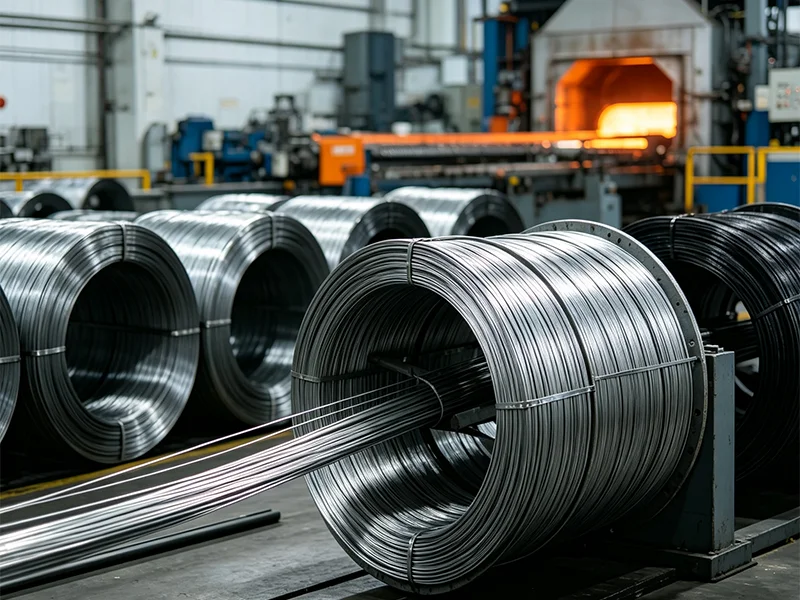
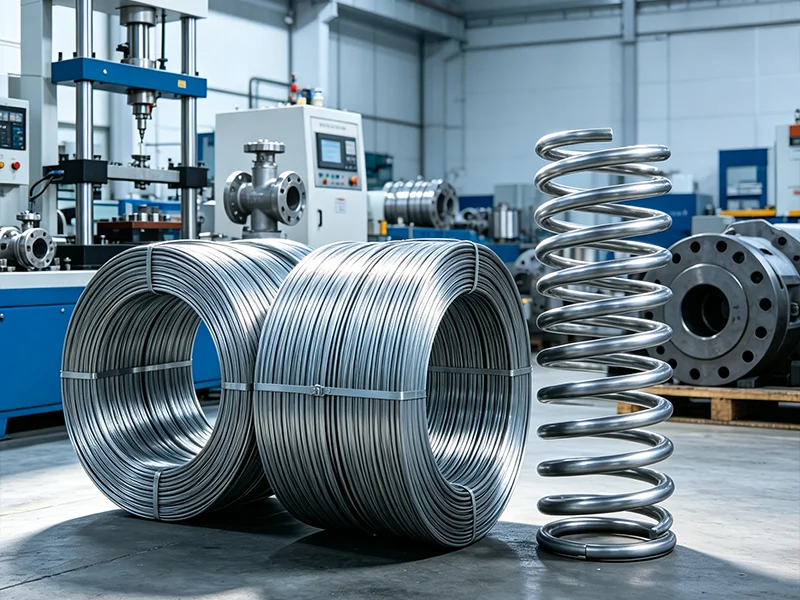
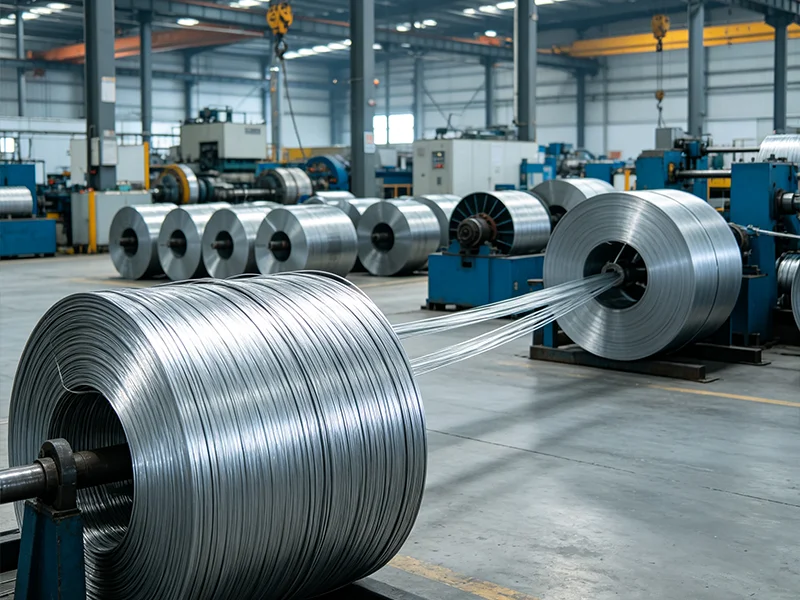
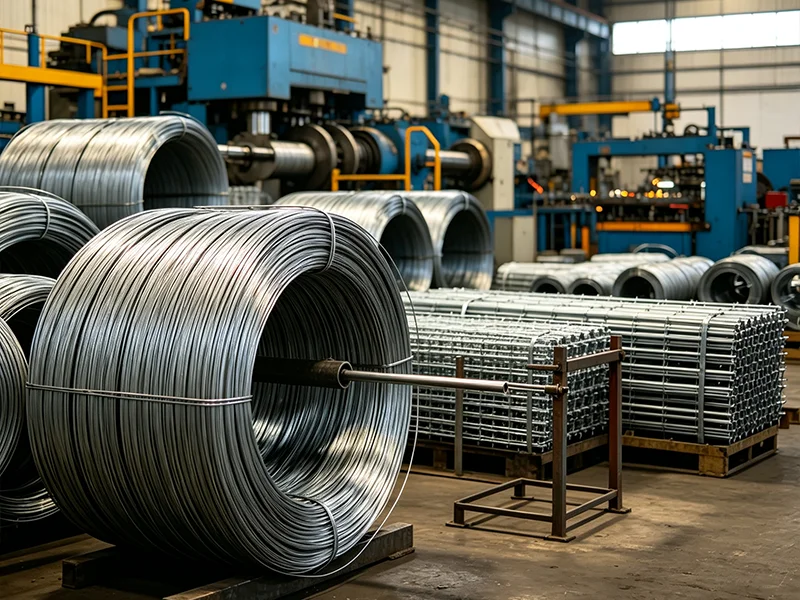
Cold Drawn Steel Wires is a high-precision steel product manufactured by pulling hot-rolled or annealed wire rod through a die at room temperature. This cold working process reduces the diameter, improves the surface finish, and significantly raises tensile strength and yield strength. The result is a wire with tighter dimensional control, better straightness, and more consistent mechanical properties than hot-rolled alternatives. Luguan has produced steel wire for over two decades, serving automotive, construction, industrial equipment, and fastener manufacturers across North America, Europe, and Asia.
The production of cold drawn steel wire begins with carefully selected wire rod. Luguan sources low-carbon, medium-carbon, and high-carbon steel grades to match the required strength, ductility, and fatigue resistance. The raw rod is first descaled to remove mill scale. It is then coated with a lubricant carrier such as phosphate or borax. During drawing, the wire passes through tungsten carbide or diamond dies at controlled speeds. Each die reduces the cross-sectional area by a specific percentage, usually between 10% and 35% per pass. The cold work introduces dislocations in the steel microstructure, which increases strength while reducing ductility. If the final product requires higher elongation, an in-line or batch annealing step can be applied before the last drawing pass.
Primary Applications
Cold drawn steel wires serves as a base material for a wide range of manufactured goods. The combination of high strength, consistent diameter, and clean surface makes it suitable for automated forming, welding, and coiling operations.
-
Spring wire: compression springs, tension springs, torsion springs, and valve springs in automotive and industrial equipment
-
Fastener wire: screws, bolts, rivets, and nails that require consistent upsetting and thread rolling
-
Welding wire: MIG and TIG filler wire with copper coating for stable arc performance
-
Wire rope and strand: lifting ropes, control cables, and structural strand for bridges and cranes
-
Prestressed concrete wire: indented or plain wire for concrete pipes, railway sleepers, and precast panels
-
Fencing and mesh: galvanized and bright wire for chain link, welded mesh, and gabion baskets
-
Automotive components: seat frames, wiper arms, brake cables, and transmission springs
-
Agricultural wire: baling wire, trellis wire, and high-tensile field fence
Each application demands a specific combination of diameter tolerance, surface condition, and mechanical properties. Luguan works with customers to select the right steel grade and drawing schedule. For example, valve spring wire requires non-metallic inclusion control and surface defect-free drawing. Fastener wire needs consistent spheroidized microstructure to prevent cracking during heading. Welding wire requires uniform copper coating and precise cast and helix to ensure smooth feeding. Luguan adjusts the production process accordingly and provides mill test reports with each batch.
Quality Control and Testing at Luguan
Luguan operates an in-house laboratory equipped with universal tensile testing machines, torsion testing equipment, laser micrometers, eddy current surface inspection systems, and optical emission spectrometers. Every production lot is tested before release. The standard inspection plan includes the following checks:
-
Tensile strength and yield strength measured on at least three samples per coil or spool
-
Elongation and reduction of area recorded for ductile grades
-
Torsion and reverse bend tests for spring wire and high-carbon wire
-
Surface roughness and defect inspection using eddy current or visual methods
-
Diameter and out-of-roundness measured continuously with laser gauges during drawing
-
Coating weight and adhesion tested for galvanized, phosphated, and copper-coated wire
-
Chemical composition verified with spectrometer against the mill certificate
Luguan is certified to ISO 9001:2015 and IATF 16949:2016. The production records for each heat number are kept for a minimum of ten years, allowing full traceability from raw material to finished coil. Customers in the automotive and construction sectors often request PPAP documentation, and Luguan supports level 3 PPAP submissions with dimensional reports, material certificates, and process flow diagrams.
Custom Manufacturing and Technical Support
Standard sizes are available from stock in selected diameters. However, most cold drawn steel wires orders at Luguan are produced to customer-specific specifications. The engineering team reviews the drawing, surface treatment, packaging, and delivery schedule for each inquiry. If a customer is unsure which grade to choose, Luguan provides technical recommendations based on the end use, required tensile strength, and forming method.
Custom capabilities include special diameter tolerances down to ±0.005 mm for fine wire, controlled cast and helix for welding wire, spool winding with adjustable tension, and bright annealing under protective atmosphere. Luguan also offers cut-to-length bars, straightened wire, and chamfered ends for fastener manufacturers. Short lead times are available for trial orders, and production samples are shipped before mass production when required.
Frequently Asked Questions
Question: What diameter range can Luguan supply?
Answer: Luguan supplies steel wire from 0.15 mm to 16.00 mm in diameter. The standard tolerance ranges from ±0.01 mm for fine wire to ±0.05 mm for thicker wire. Special tolerances as tight as ±0.005 mm can be produced for fine wire applications. Coil weight and spool size are matched to the diameter to ensure safe handling and smooth unwinding at the customer's production line.
Question: Which steel grades are available ?
Answer: Luguan works with low-carbon grades such as SAE 1006, SAE 1008, and SAE 1018, medium-carbon grades such as C45 and C50, and high-carbon grades such as C60, C72A, and C82B. Alloy grades including 65Mn and 60Si2Mn are also available for spring applications. The choice of grade depends on the required tensile strength, ductility, fatigue life, and downstream heat treatment. Luguan engineers help match the grade to the specific forming and end-use requirements.
Question: What surface finishes are offered for cold drawn steel wires?
Answer: Common finishes include bright, phosphate-coated, galvanized, copper-coated, oiled, and soap-coated. Bright wire is clean and ready for plating or painting. Phosphate coating helps with cold heading and spring forming. Galvanized wire offers corrosion resistance for outdoor exposure. Copper-coated wire is used primarily for welding and electrical applications. Oiled and soap-coated wire provide temporary protection and lubrication for further processing.
Question: Can Luguan provide custom mechanical properties ?
Answer: Yes. Luguan adjusts the drawing reduction, number of passes, and annealing steps to achieve the requested tensile strength, yield strength, and elongation within the material capability. If a customer needs a specific range, the production team can perform trial draws and send samples for approval before full production. Process data is recorded for each trial so that repeat orders maintain the same mechanical properties.
Question: What certifications and quality documents does Luguan provide?
Answer: Luguan is certified to ISO 9001:2015 and IATF 16949:2016. Each shipment includes a mill test report with chemical composition, tensile strength, yield strength, elongation, diameter, surface condition, and coating weight as applicable. Additional documents such as PPAP level 3, material safety data sheets, and inspection reports can be provided on request. Full traceability from raw material heat number to finished coil is maintained in the production record system.